

Last updated: September 2026
Level: Intermediate Developers
Primary Goal: Use Git intelligence to transform iterative work into clean, reviewable history
When to use this workflow
Use this workflow when you are:
-
Preparing a pull request for review
-
Cleaning up “wip” or noisy commit history
-
Juggling multiple streams of work
-
Optimizing for reviewer clarity and speed
Real-world scenario
You have finished implementing a feature, but your branch contains several exploratory commits that would be difficult for reviewers to follow.
How GitLens helps (in practice)
You begin by opening the Commit Graph from the GitLens sidebar, which gives you a visual view of your branch history and how your work diverges from main. From there, you select the commits related to the feature and open Commit Composer directly from the graph.
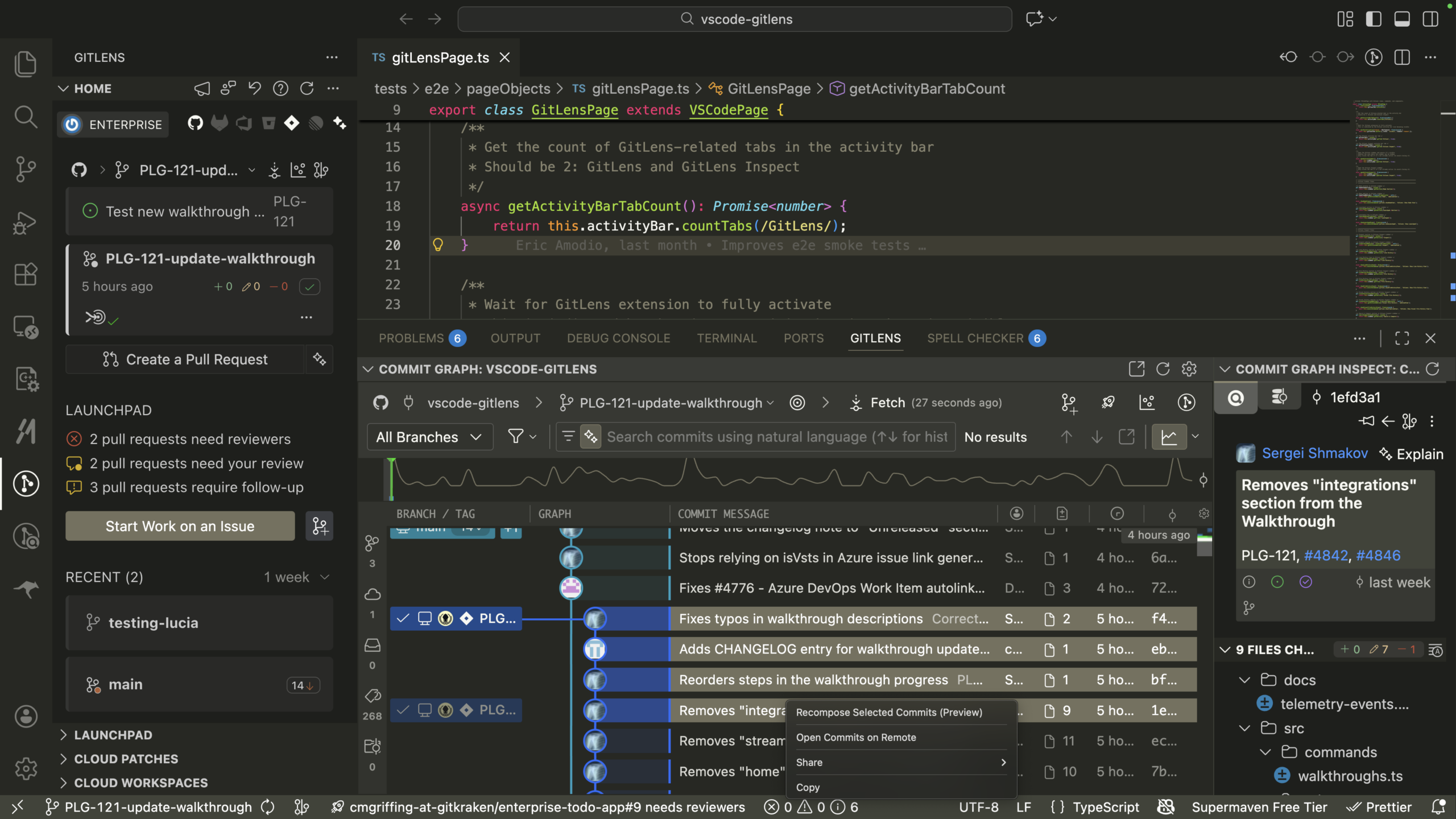
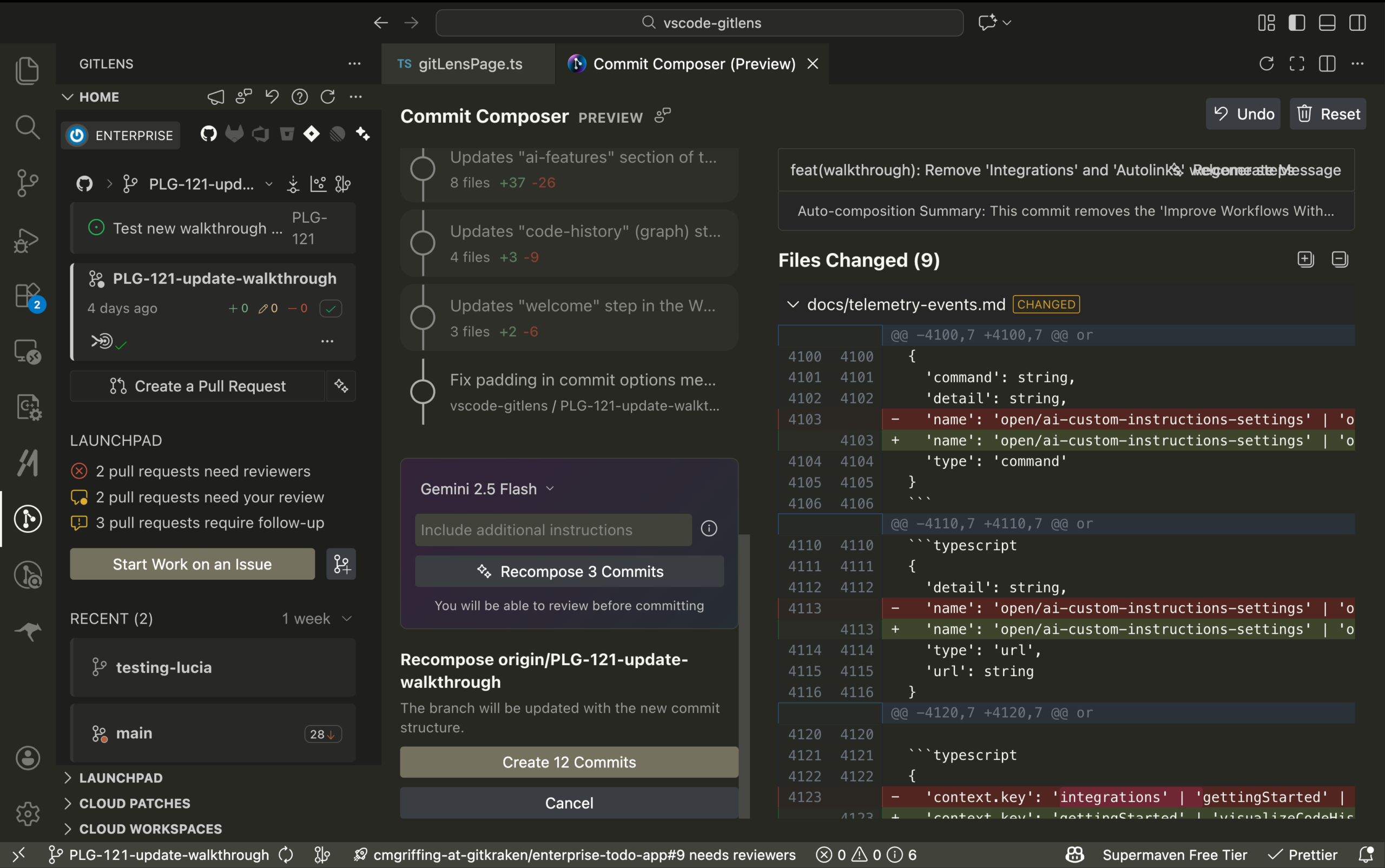
Commit Composer uses Git intelligence to understand the structure of your changes and allows you to recompose them into clearer, more intentional commits. With Selective Recomposition, you can choose only the relevant commits, rewrite their messages, split changes, or combine related work, all before anything is rewritten on disk.
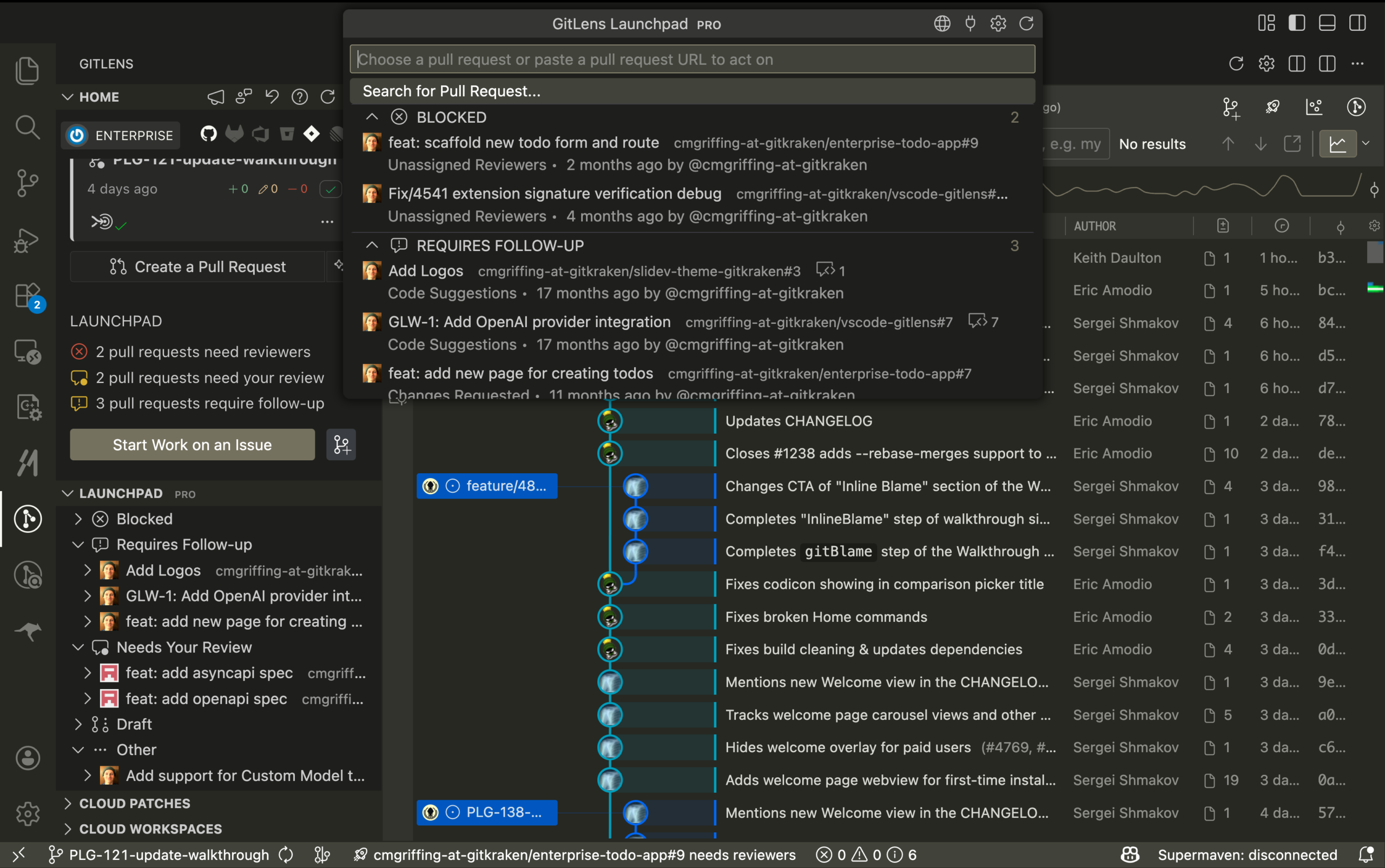
As you review your branch, you open Launchpad to check for open pull requests, review feedback, or dependencies that might affect your changes, keeping everything in one place instead of jumping between tools.
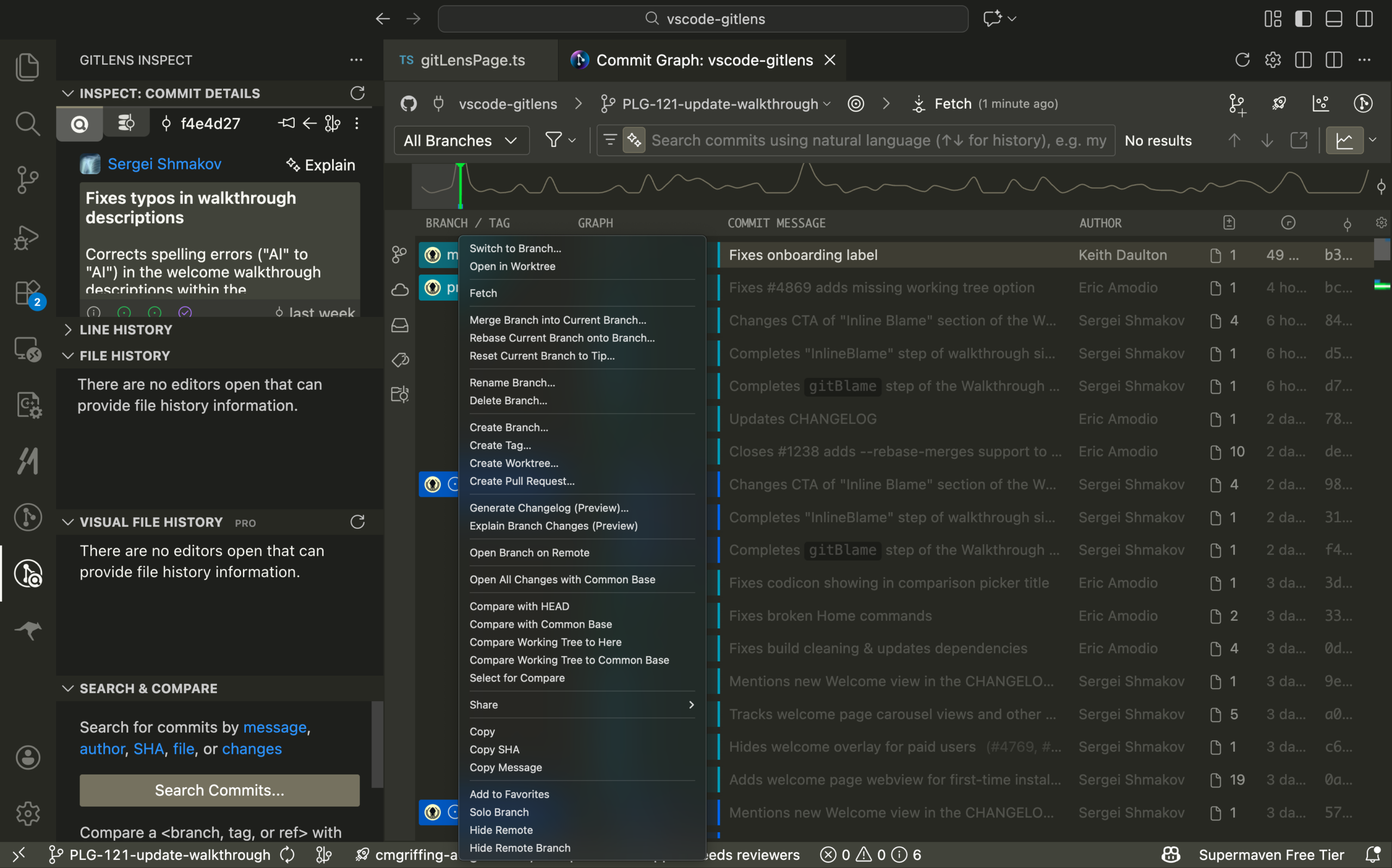
When an urgent fix on another branch comes up, you create a Worktree from GitLens, which lets you check out another branch in a separate folder without stashing or disturbing your current work. Throughout the process, you rely on advanced Commit Graph context menu actions, accessed by right-clicking commits, to compare branches, inspect diffs, and validate that your history tells a clear story.
GitLens uses Git intelligence to help you ship work that is easier to review, reason about, and maintain.
Key GitLens features used
-
Start Review (quick-pick wizard to select a PR, check out branch or worktree, and optionally open AI review chat)
-
Worktrees (parallel branch workflows)
-
Commit Graph context menu actions
Outcome
You submit a pull request with a clean, intentional commit history that reviewers can understand quickly and confidently.
