

Last updated: September 2026
The Commit Graph is your starting point for working in GitLens. More than a visualization of repository history, it brings your repository state, working changes, branches, worktrees, and supported coding agent activity together in one connected workbench.
From here, you can understand what’s happening across your repository, coordinate parallel work, review and shape changes, and move work toward merge without rebuilding context across disconnected views and tools.
One Graph. Your development workflow, end to end.
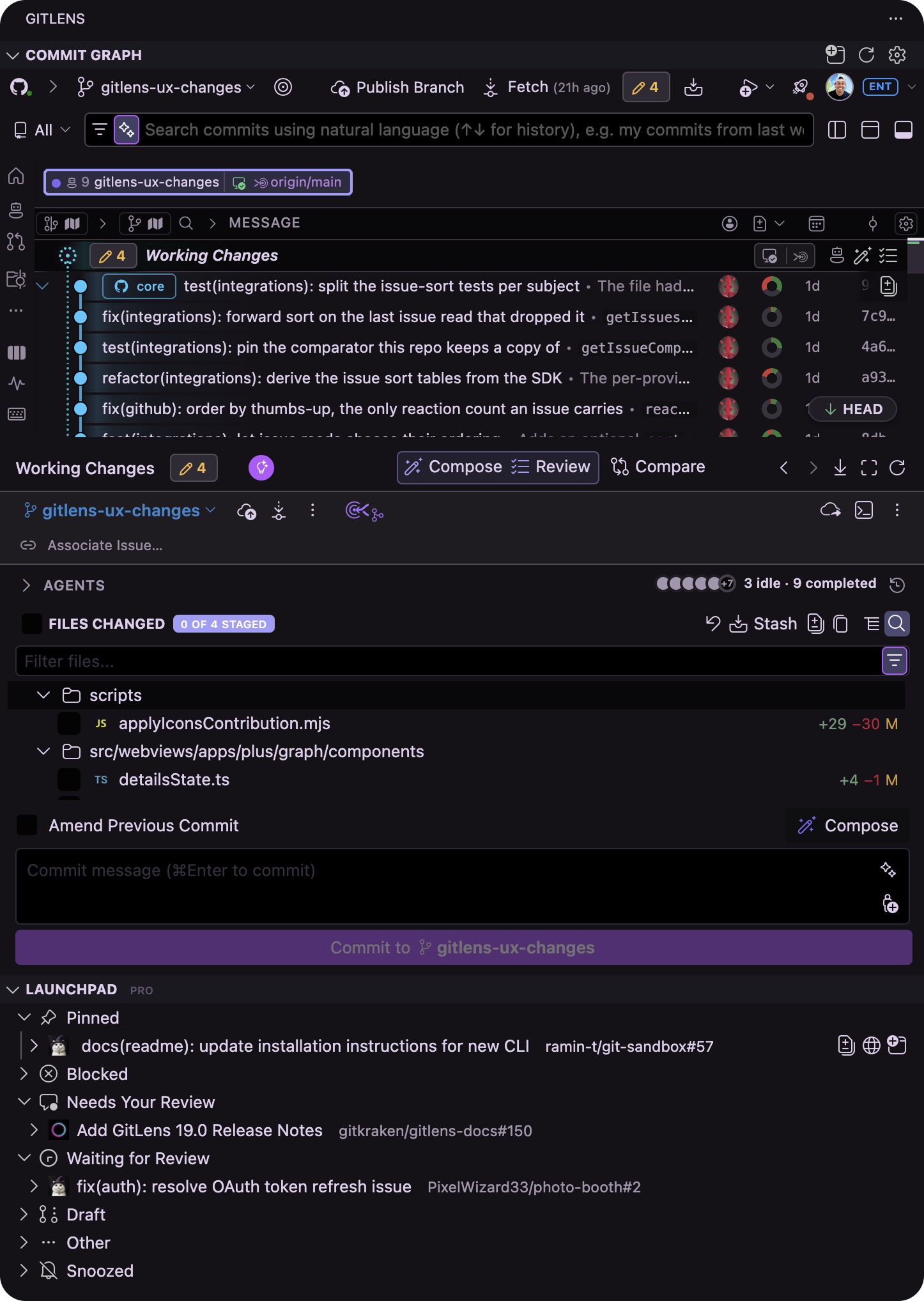
Welcome View
When you first install or update GitLens, the Welcome sidebar view appears above the Commit Graph. It provides a multi-step walkthrough covering Getting Started, Home, Commit Graph, AI Features, Git Blame, PR Reviews, and MCP. The content adapts to your subscription level, helping you discover the features available on your plan.
Start in the Commit Graph
When you open GitLens, the Commit Graph gives you a connected view of your repository and the work happening across it.
At a glance, you can understand:
- Your current branch, HEAD, upstream, and merge target
- Working changes across multiple worktrees
- Incoming and outgoing work
- Branches and commits across your repository
- Supported coding agent sessions and their status
- Work that may need review or attention
The Commit Graph gives you both the big picture and the context to decide what to do next. When you need to narrow your focus, you can focus the Graph on a single branch while keeping the broader repository within reach.
Manage Parallel Human and Agent Work
As development spreads across multiple branches, worktrees, and coding agents, keeping track of what is happening becomes more challenging. The Commit Graph keeps these parallel streams visible and connected to the Git context behind them.
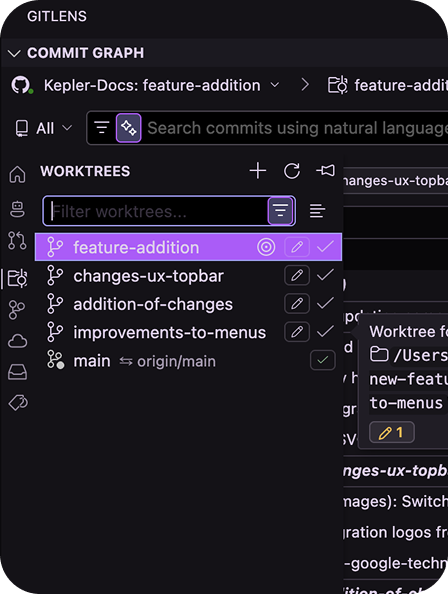
Multi-worktree Working Changes shows uncommitted work across your worktrees, not just the one you currently have open. Agent Sessions connects supported coding agent activity to the branches and worktrees where that work is happening.
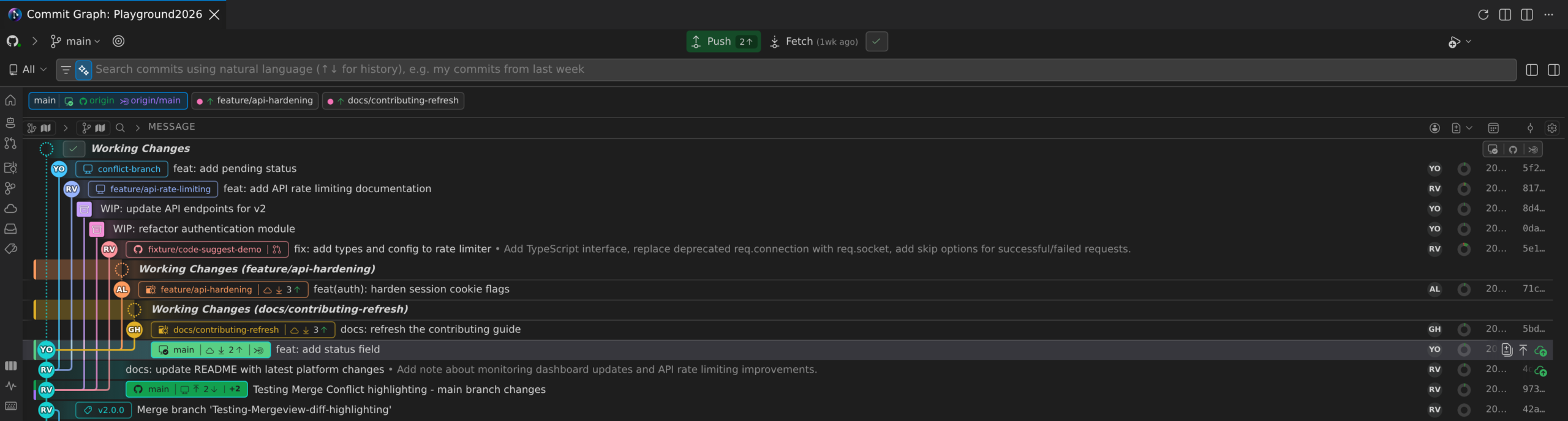
From the Commit Graph, you can:
- See work in progress across multiple worktrees
- Monitor supported coding agent sessions
- Identify sessions that need your attention
- Understand where agent work is happening
- Jump directly into working changes
- Resume work with the surrounding repository context intact
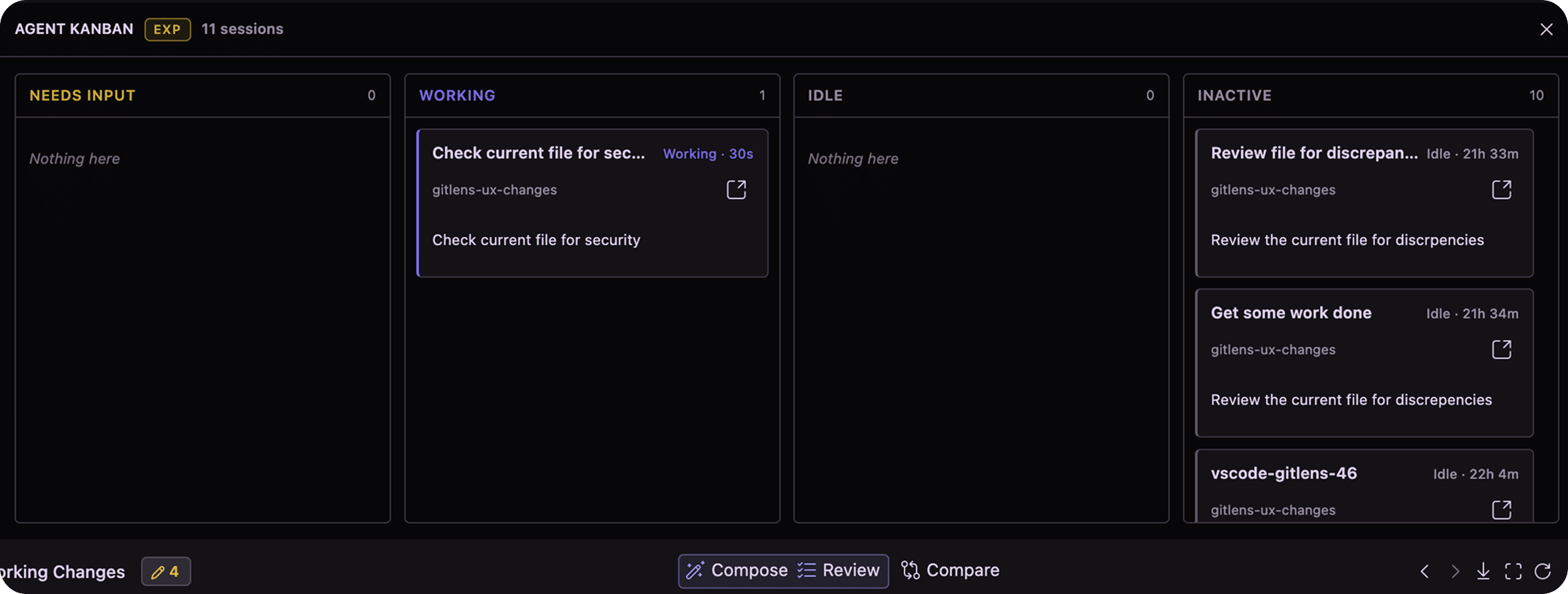
Agent Kanban
Agent Kanban provides a visual way to understand parallel agent work at a glance. Agent sessions are organized by status, including Needs Input, Working, Idle, and Inactive, so you can quickly identify what is progressing and where your attention is needed.
From the board, you can inspect agent work and jump into the associated session and working changes.
Run Your Development Workflow from the Commit Graph
The Commit Graph is more than a place to see the work. It gives you the context and tools to move that work forward.
- Monitor
See human and agent work happening across branches, worktrees, and sessions, and quickly identify what needs your attention.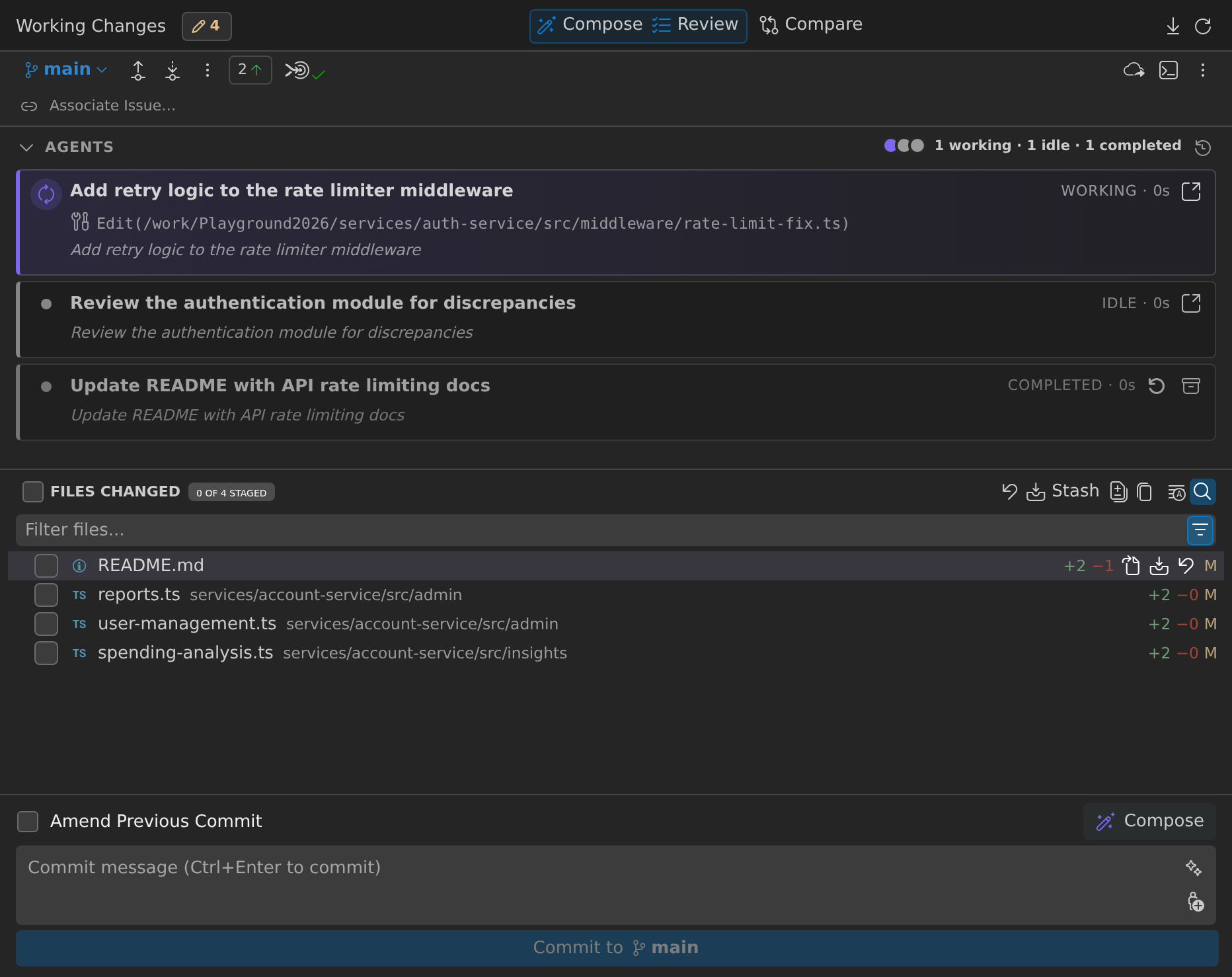
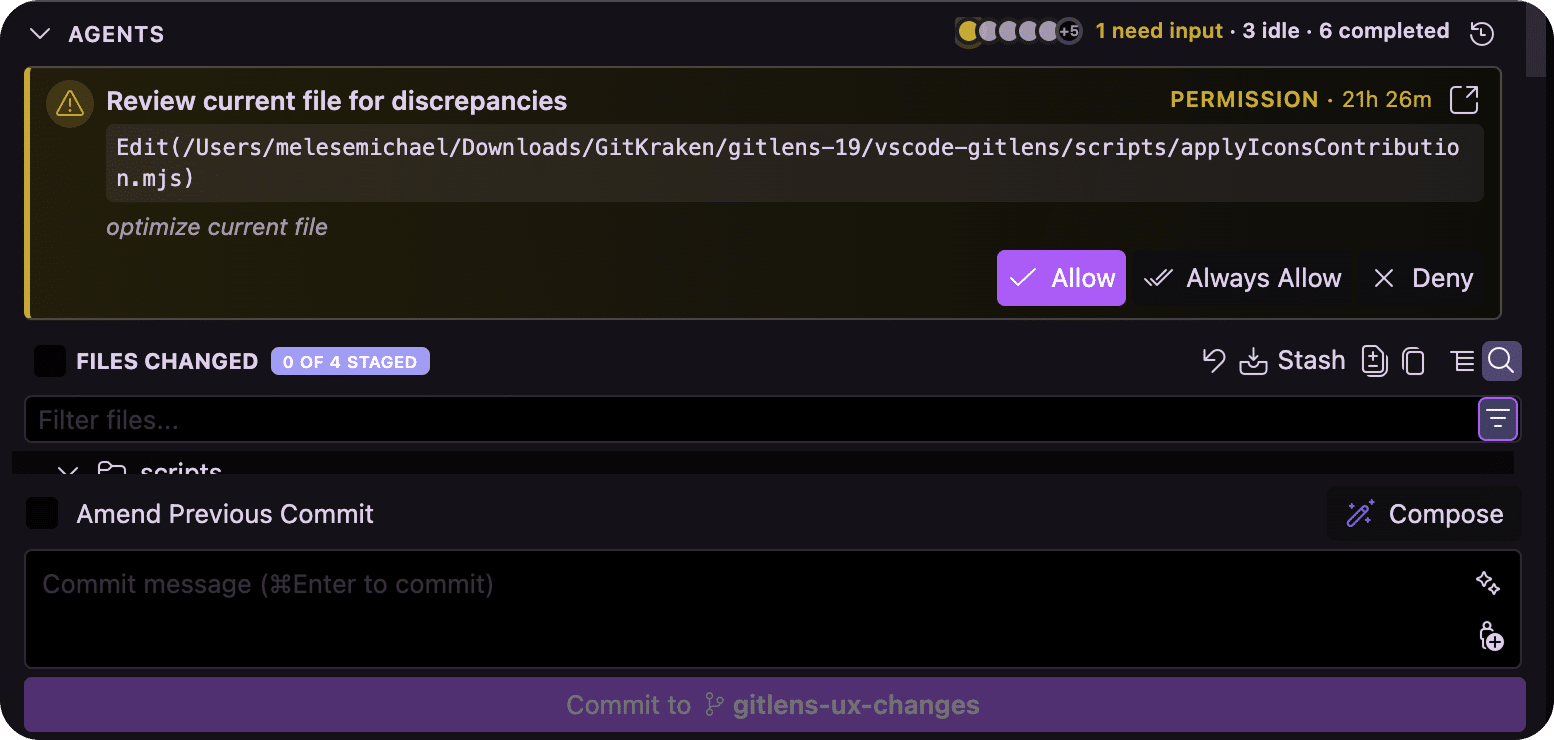
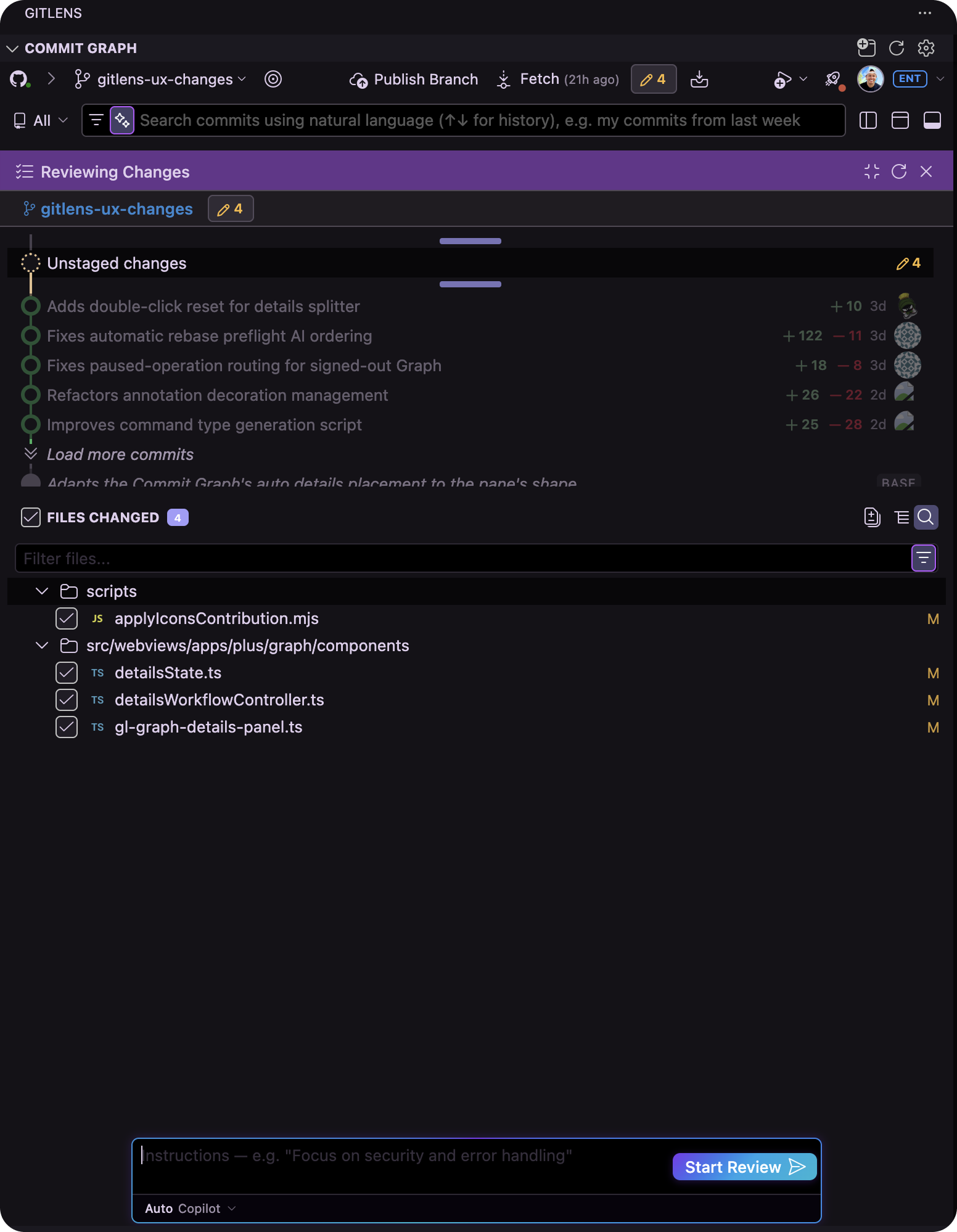
- Review
Review human or agent-generated changes with AI-powered Review. Surface meaningful findings, ask follow-up questions, and send feedback back to your coding agent when another pass is needed.
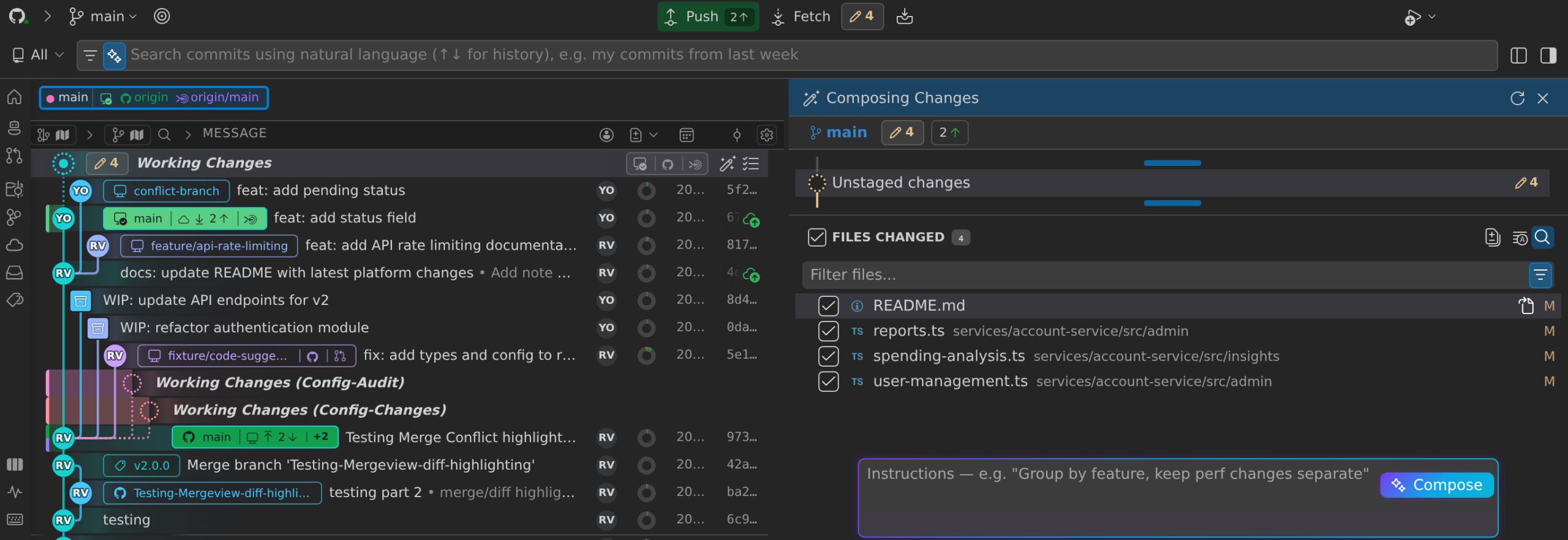
- Compose
Turn working changes into clean, logical commits with Commit Composer. Organize related changes, refine commits with AI assistance, and preview the result before writing it to your history.
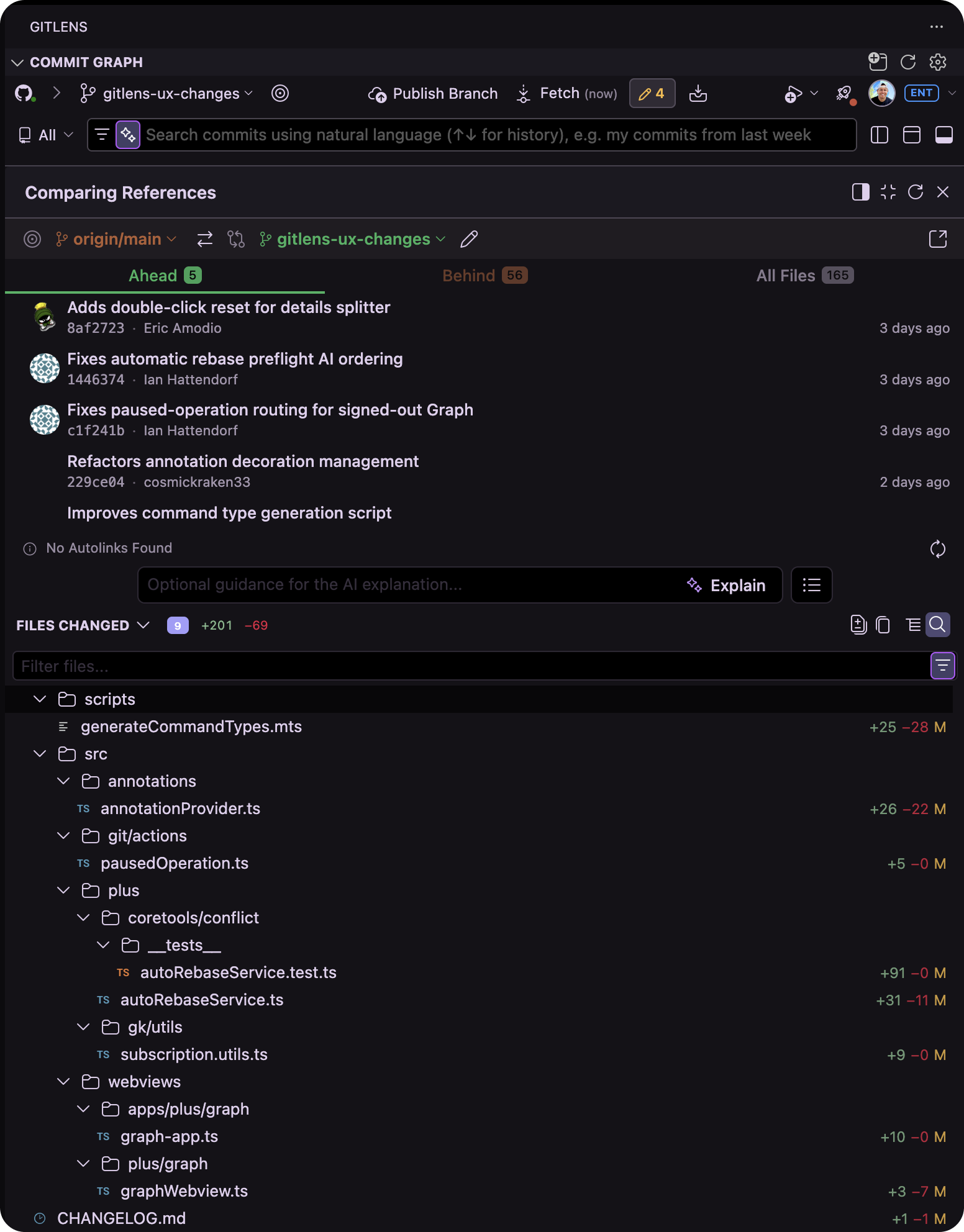
- Compare
Compare branches, commits, revisions, and working changes to quickly understand exactly what changed before moving work forward.
- Rebase
Use AI-powered Rebase to automate tedious rebasing while staying in control of how your commit history is prepared.
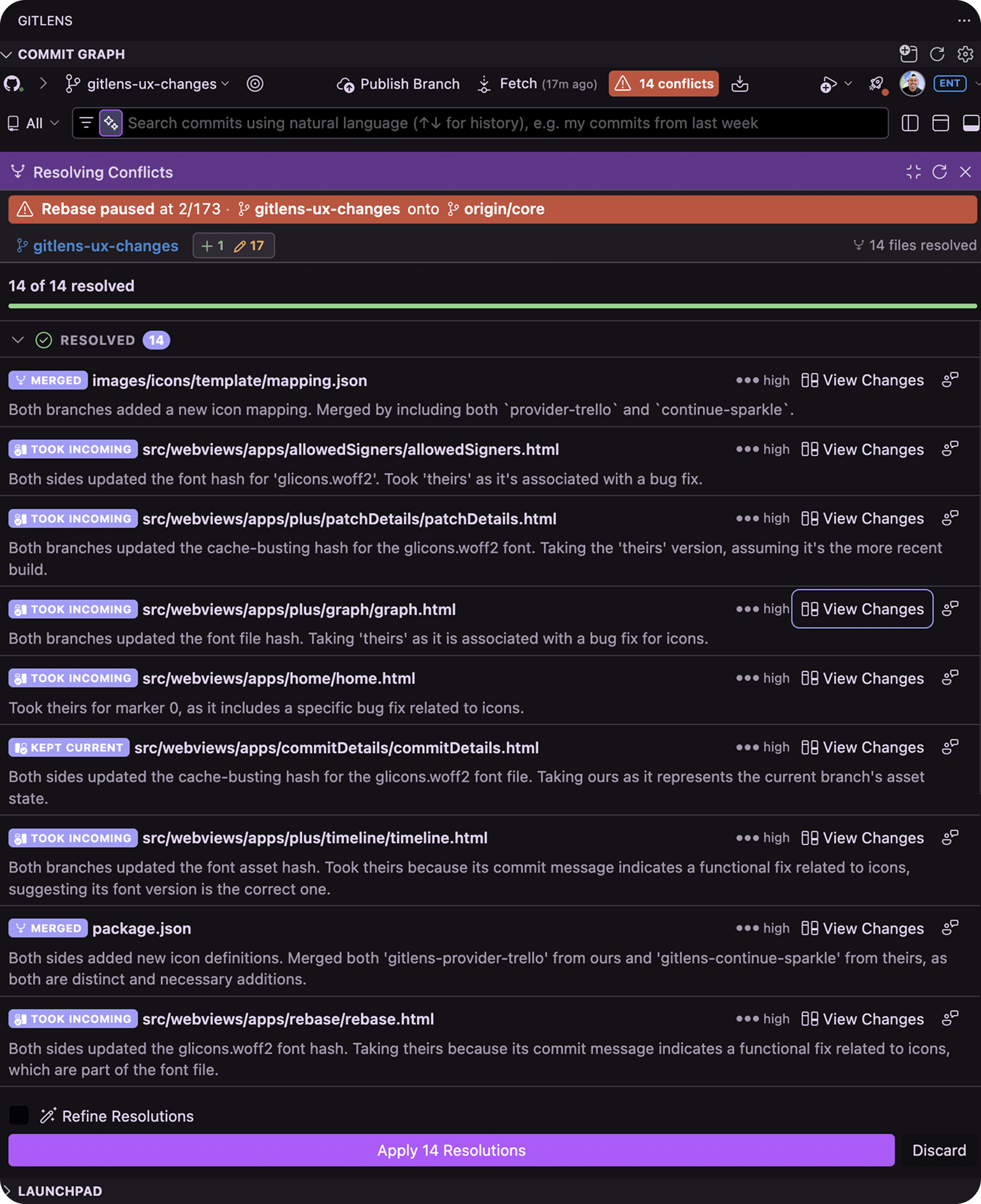
- Resolve
When parallel work collides, use AI-assisted conflict resolution to understand and resolve conflicts while keeping the surrounding repository context in view.
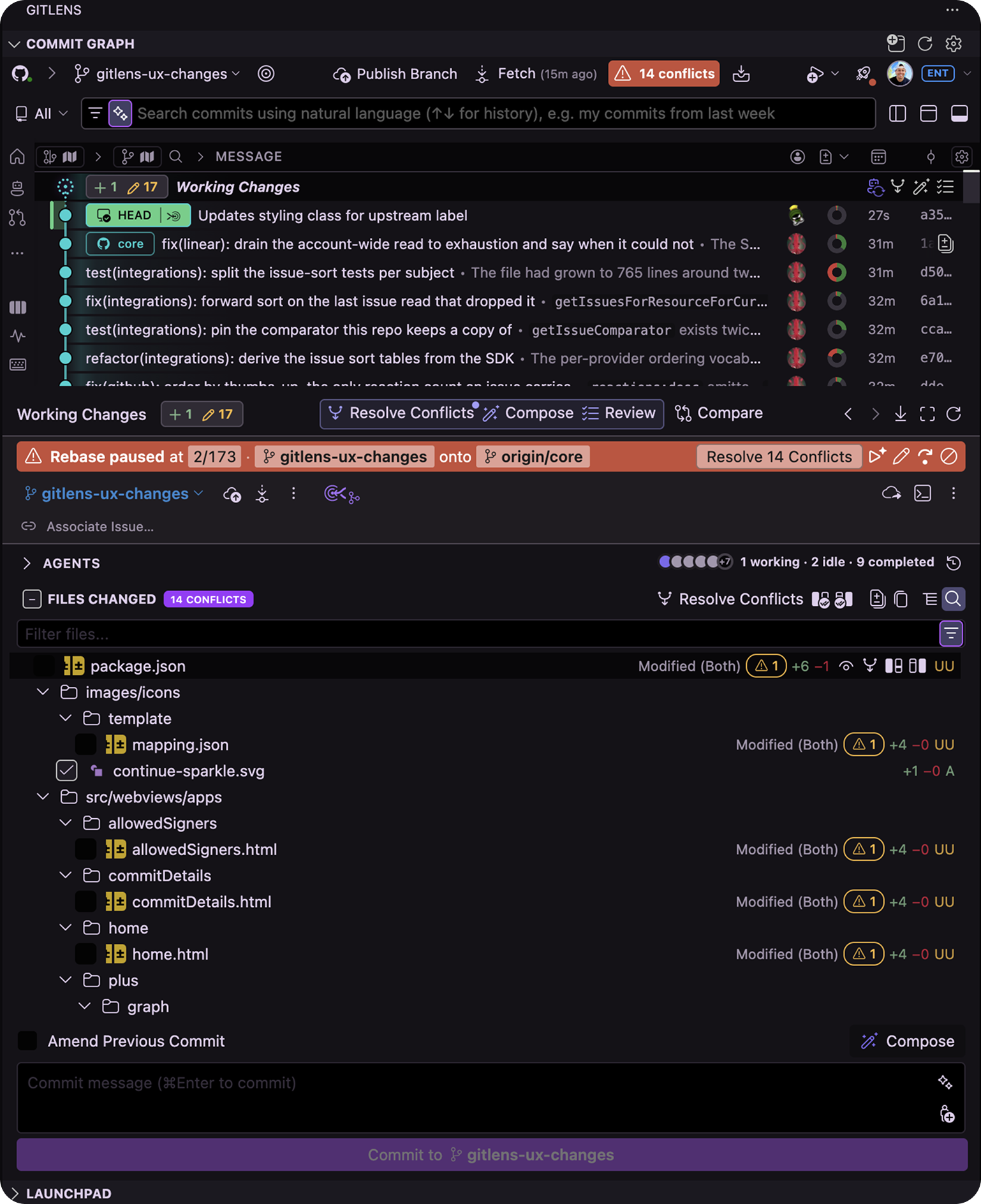
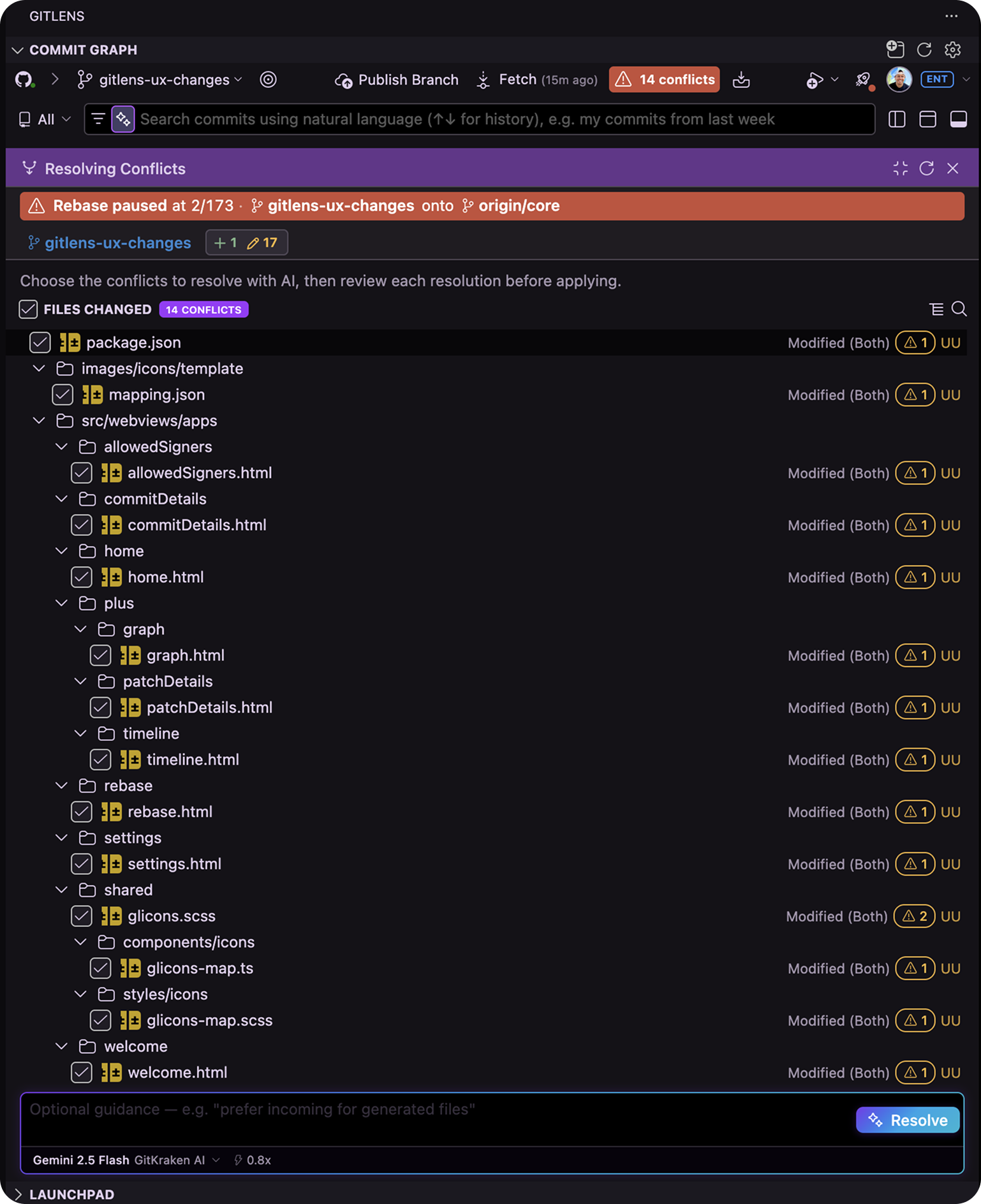
Monitor parallel work. Review what changed. Shape it. Compare it. Rebase and resolve it. Get it ready to merge. All from the Commit Graph.
Change Branch Merge Target
You can set or reset the merge target for any branch using the Change Branch Merge Target command. This multi-step wizard lets you pick a repository, select a local branch, and choose a remote branch as its merge target. You can also reset the merge target if one was previously set.
How to access:
- From the Commit Graph: Use the merge target indicator in the branch header
- From the Command Palette:
GitLens: Change Branch Merge Target
Stay Oriented as Work Moves
The Commit Graph keeps important reference points visible as your repository changes.
HEAD, upstream, merge target, ahead and behind status, and incoming work indicators help you understand where you are, what has changed remotely, and where your work is headed.
For larger or more active repositories, you can focus the Commit Graph on a single branch, pin important branches, or use search to quickly find commits, authors, files, messages, and specific code changes.
Explore More GitLens Workflows
Continue exploring the workflows available from the Commit Graph:
- Agent Sessions to monitor supported coding agent activity
- Worktrees to manage parallel development
- Review to understand and validate changes
- Commit Composer to shape changes into logical commits
- Compare to understand differences across your work
- AI-powered Rebase to automate and clean up rebases
- AI-assisted Conflict Resolution to resolve overlapping work
- Visual History to visualize how files, branches, or your entire repository evolved over time
- Launchpad to prioritize pull requests and move work toward merge
Or follow a complete workflow from start to finish:
