

Last updated: March 2026
CI/CD for Jira (previously a free extension, now included in Git Integration for Jira) connects your CI/CD DevOps pipelines with Jira’s builds and deployments features. Just as Git Integration for Jira exposes commits, branches, and pull requests, CI/CD for Jira adds build and deployment information associated with Jira issues.
CI/CD for Jira tracks builds and deployments by Pull Requests. The extension supports classic pipelines and YAML pipelines for builds only. If you run your deployments through the build YAML pipeline, the deployments do not appear.
- Supported services
- Setup
- Associating issues
- Does this extension support sending build/deployment information via webhook?
- Viewing builds and deployments in a Jira issue
- How to enable Deployment View in Jira
- How to use JQL searches for builds and deployments
- How to trigger Automation for Jira with builds and deployments
Supported services
CI/CD for Jira currently supports the following tools for build and deployment information:
- GitHub Actions (Cloud or Self Hosted)
- GitLab CI/CD (Cloud or Self Hosted)
- Azure DevOps Pipelines (Cloud or Self Hosted)
- Bitbucket Pipelines (Cloud)
Setup
Head to App settings and select “Enable CI/CD”. Ensure your previously connected repositories have been reindexed.
Associating issues
A build automatically links to a Jira issue when one of the build’s commits includes the Jira issue key in its commit message. A deployment to an environment (such as production or testing) links to an issue when a commit associated with the deployment contains the Jira issue key in its commit message.
Does this extension support sending build/deployment information via webhook?
CI/CD for Jira Cloud does not currently support sending build/deployment information via webhook event. If you use webhook indexing, CI/CD information is not supported.
CI/CD indexing only happens during regular scheduled indexes and cannot be triggered via indexing triggers. Timing can vary based on the service you use and how you configure your pipelines.
Viewing builds and deployments in a Jira issue
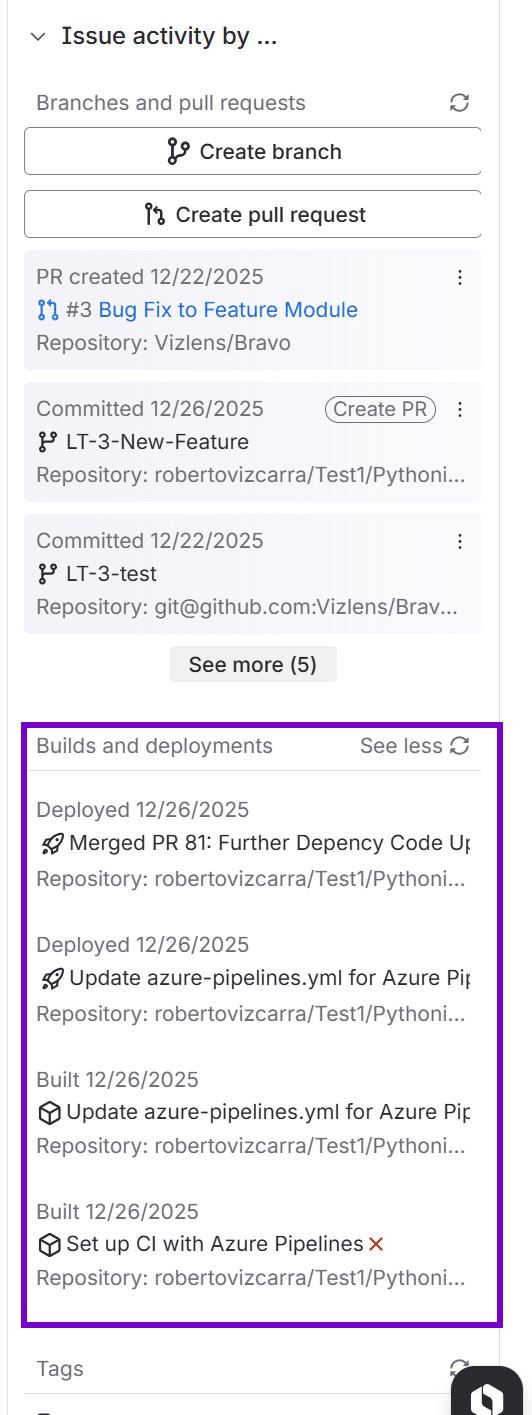
When an issue associates with a build or deployment, additional information appears in the right-hand panel.
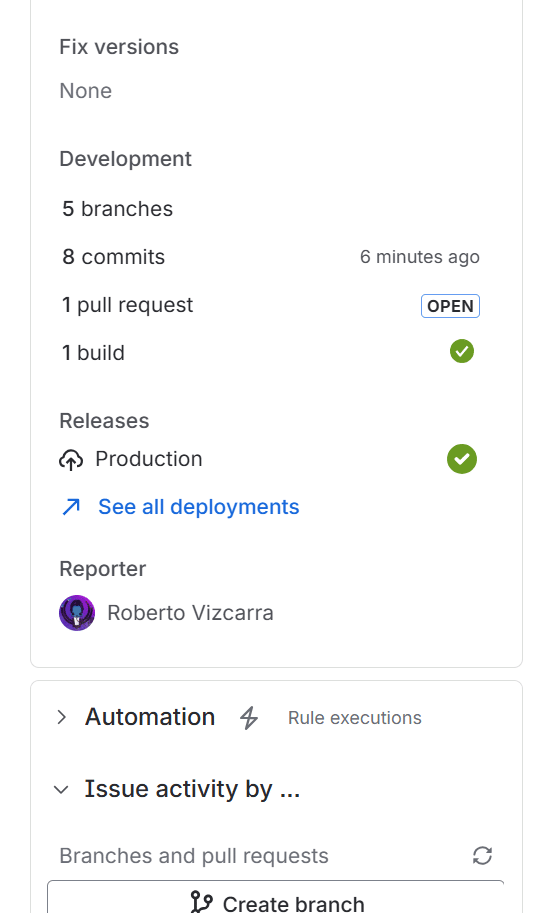
Builds and deployments show as successful or failed based on the icon on the right ( green checkmark). Click a build or release to open a new window with a link to the pipeline for more information.
For pipeline errors where a step within your pipeline has failed, several external factors may cause the failure. For example:
- A misconfiguration in your deployment tool
- An incorrectly set environment variable
If a pipeline fails, you can rerun the whole pipeline or any failed steps. For more information, see Atlassian docs on How to view your pipeline.
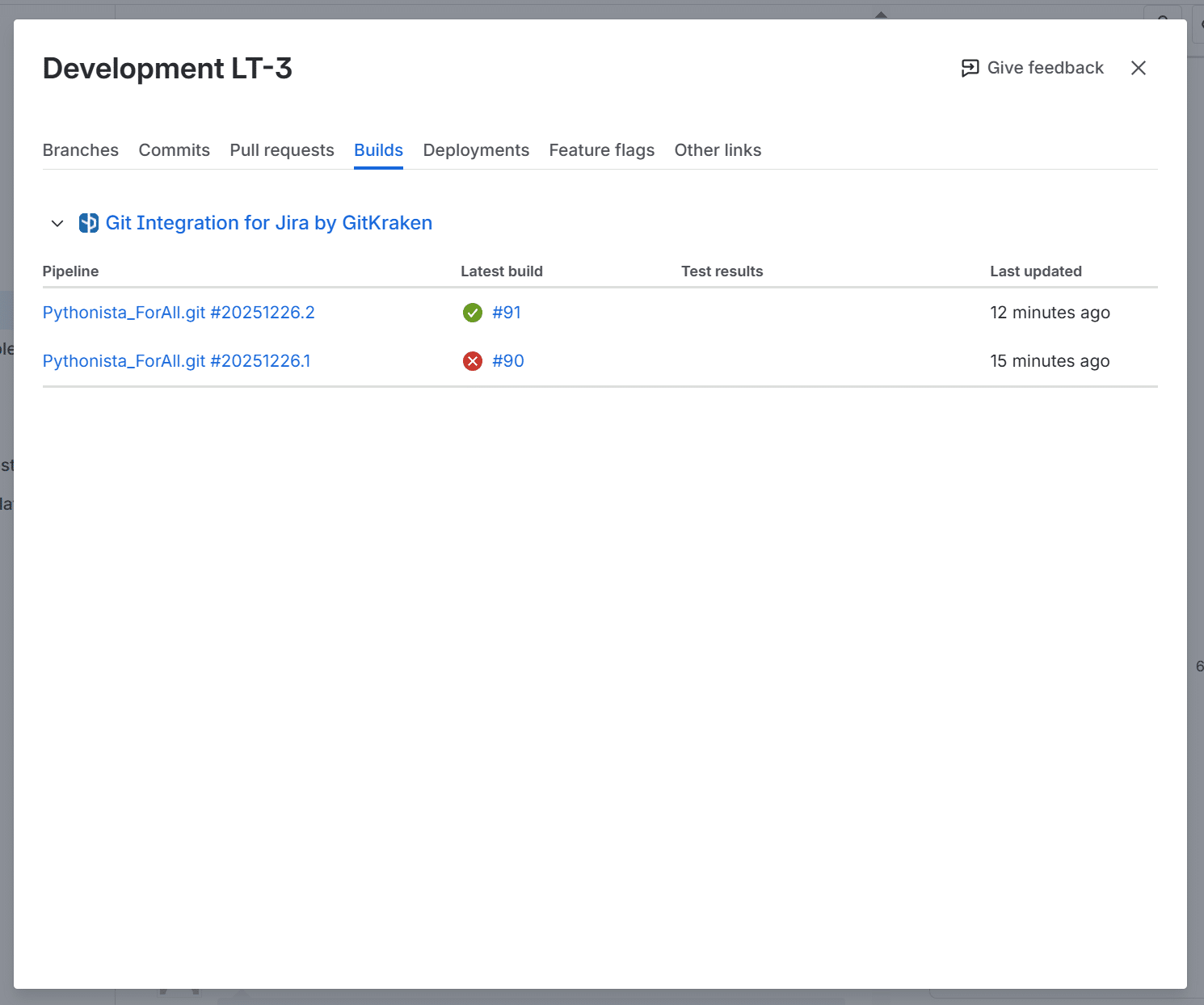
Click Open Git Integration to open a view that rolls up all commits by file and developer, and reports change statistics. From here you can click individual commits, builds, and deployments to see more information.
How to enable Deployment View in Jira
Jira includes a timeline that shows deployments across environments. You can search deployments by issues, environments, types, and more.
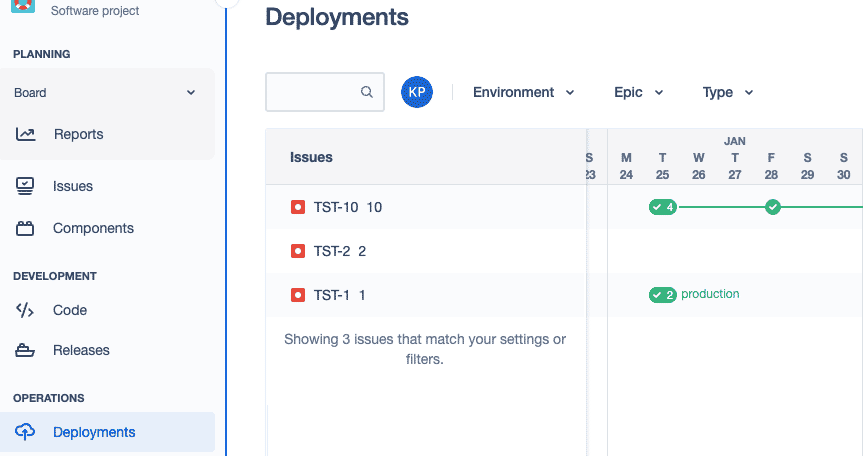
This feature is turned off by default and must be enabled.
-
Navigate to your project.
-
Go to Project settings ➜ Features.
-
Enable the Deployments feature.
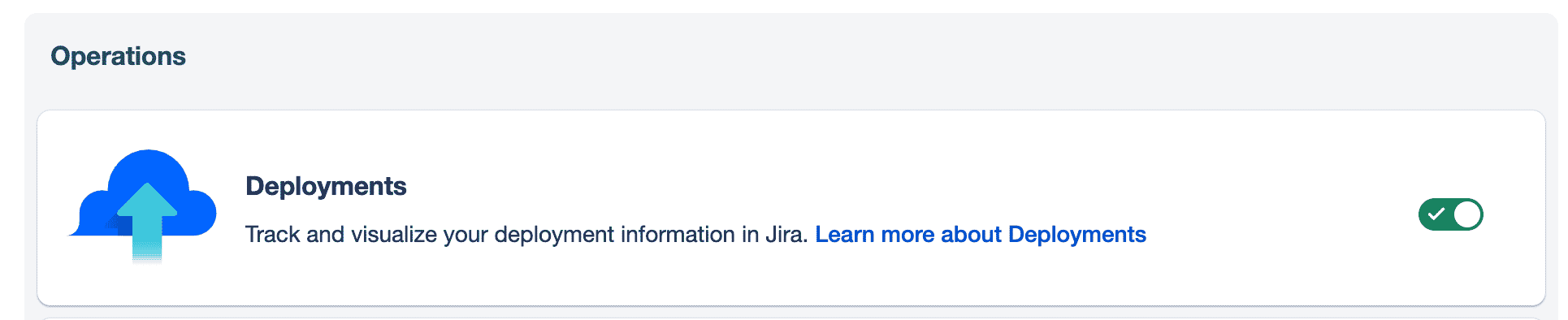
A new menu item, Deployments, appears in the left-hand project menu (under Operations).
For more information on using the deployments view, visit Atlassian Docs – Enable deployments.
How to use JQL searches for builds and deployments
Jira Query Language (JQL) provides a powerful and flexible way to search within Jira. With CI/CD for Jira, you can query build and deployment information.
From the Jira search bar, select JQL on the far right to begin writing your query.

When you begin typing, Jira offers guidance on syntax:
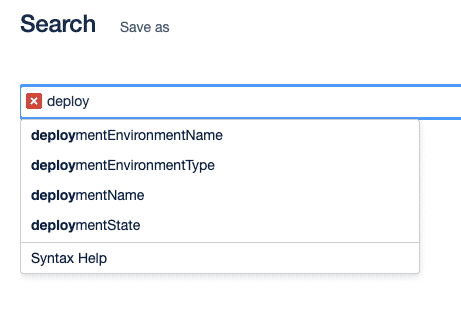
Deployments JQL functions
| Function | Description |
|---|---|
deploymentEnvironmentName |
Name of your deployment environment |
deploymentEnvironmentType |
Type of environment |
deploymentState |
Current status of the deployment |
deploymentName |
Name of the specific deployment |
Example syntax:
deploymentEnvironmentType ~ Production
Shows all issues where the latest deployment is in the production environment
Builds JQL functions
| Function | Description |
|---|---|
buildState |
Status of a build |
buildName |
Name of a build |
Example syntax:
buildState ~ successful
Shows all issues where the latest build was successful
How to trigger Automation for Jira with builds and deployments
Jira automation allows teams to control processes and workflows using rules to automate actions within Jira. Automation rules have three parts:
- Triggers – Listen for events and start executing a rule when a set condition is met.
- Conditions – Set the scope of a rule with specific events tailored for your team.
- Actions – Set automated tasks to perform when a condition is met.
Git Integration for Jira supports triggers for branches, commits, and pull requests. Adding the CI/CD for Jira extension enables the use of additional triggers:
- Build status changed, failed, and successful
- Deployment status changed, failed, and successful
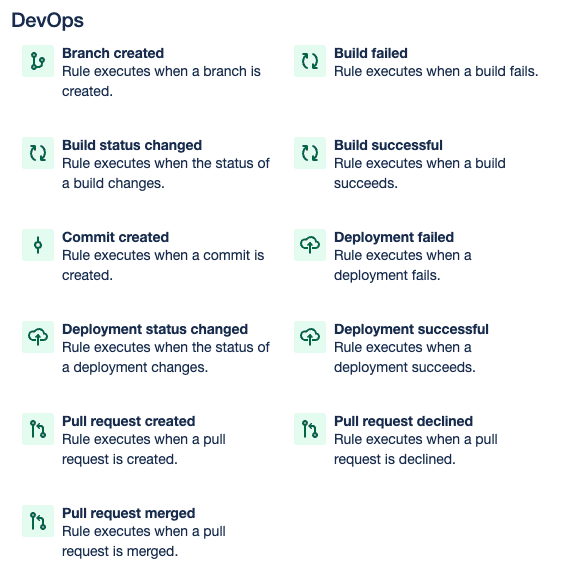
To create new rules, go to Project settings ➜ Automation ➜ Create Rule. For more information on setting up Automation for Jira rules, visit the Git Integration + Jira Automation article.
